
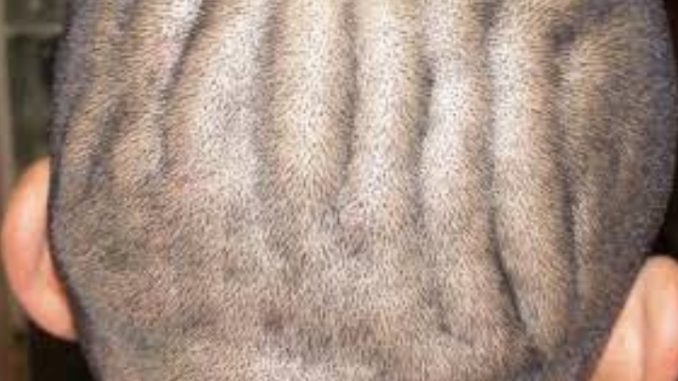
It’s common to see wrinkles on the face or neck as people age — but sometimes, men notice deep lines or folds on the scalp too. These scalp wrinkles can look unusual, but in most cases, they’re harmless. Still, understanding why they happen can help you know when it’s normal and when it’s worth paying attention to.
Here are five possible reasons some men develop wrinkles or deep lines on their scalp.
1. Natural Aging Process
As men grow older, the skin naturally loses elasticity and firmness. Collagen — the protein that keeps skin smooth and tight — decreases with age. This can cause the scalp to develop folds or visible lines, especially in men who have less hair or shave their heads, making the wrinkles more noticeable.
2. Genetic Factors
Sometimes, scalp wrinkles run in families. A rare but harmless condition called Cutis Verticis Gyrata (CVG) causes the skin on the scalp to form deep folds and ridges that resemble brain-like patterns. While it looks unusual, it’s usually not painful or dangerous. However, if the folds suddenly appear or increase, a doctor should be consulted to rule out other causes.
3. Excessive Sun Exposure
The scalp, especially when bald or shaved, is constantly exposed to sunlight. Over time, UV rays break down collagen and elastic fibers in the skin, causing wrinkles and roughness. This type of skin damage can be prevented by using sunscreen or wearing a hat outdoors to protect the scalp from harmful rays.
4. Weight Changes or Loose Skin
Significant weight loss can sometimes lead to loose skin in different parts of the body — including the scalp. When the fat layer beneath the scalp skin becomes thinner, the skin may sag or wrinkle. In other cases, natural fat distribution or aging skin can create a similar effect even without major weight loss.
5. Underlying Health Conditions
In rare cases, scalp wrinkles may be linked to hormonal imbalances, thyroid issues, or connective tissue disorders. If the folds come with other symptoms — like thickened skin, swelling, or headaches — it’s best to see a dermatologist or healthcare professional. Early examination helps rule out serious causes and ensures proper treatment if needed.
Leave a Reply