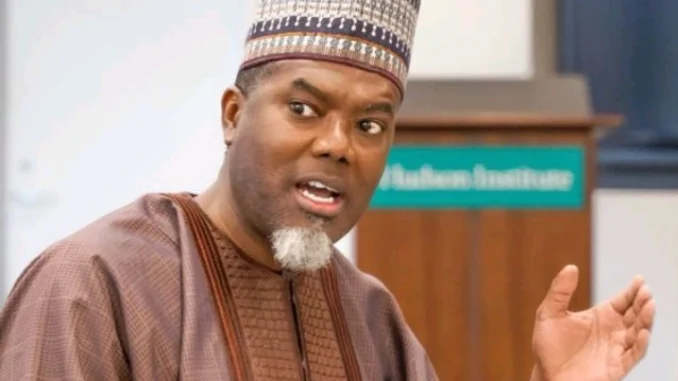
According to a report by Daily Post published on Monday, September 14, 2026, Nigeria’s Ambassador-designate to Mexico, Reno Omokri, has challenged the widespread perception that Nigeria is among the world’s most corrupt and unsafe countries.
Omokri argued that some international assessments of corruption may fail to capture the realities of Nigerian society. He said global organisations often rely on broad criteria that, in his view, do not sufficiently account for the country’s cultural practices, traditions and social interactions.
The ambassador-designate also claimed that Nigeria’s standing on corruption has recorded some improvement under the administration of President Bola Tinubu. However, he maintained that certain practices regarded as corrupt by international observers could sometimes be rooted in cultural customs rather than an intention to engage in wrongdoing.
According to Omokri, it is not unusual in some Nigerian communities for members of the public to show appreciation to government officials who have carried out their responsibilities effectively. He argued that such expressions of gratitude should not automatically be interpreted as evidence of corruption.
He further called on Nigerians to play a greater role in shaping the international image of the country. Omokri said Nigeria has often been portrayed through negative stereotypes, which he believes have overshadowed developments and positive changes taking place in different parts of the country.
As an example of Nigeria’s economic potential, he cited Lagos State, pointing to what he described as significant economic expansion in recent years under Governor Babajide Sanwo-Olu.
Omokri said the growth in Lagos’ Gross Domestic Product, alongside increases in income levels, demonstrates that Nigeria has considerable economic potential when appropriate policies and leadership are in place.
“Nigeria is not as corrupt as the world thinks, it is because the metrics they are using to gauge corruption are global metrics and they do not take into account the particular culture of Nigeria,” he said.
His comments come amid continuing debates over Nigeria’s international reputation, corruption rankings and the extent to which global indicators accurately reflect conditions within individual countries.
Leave a Reply